

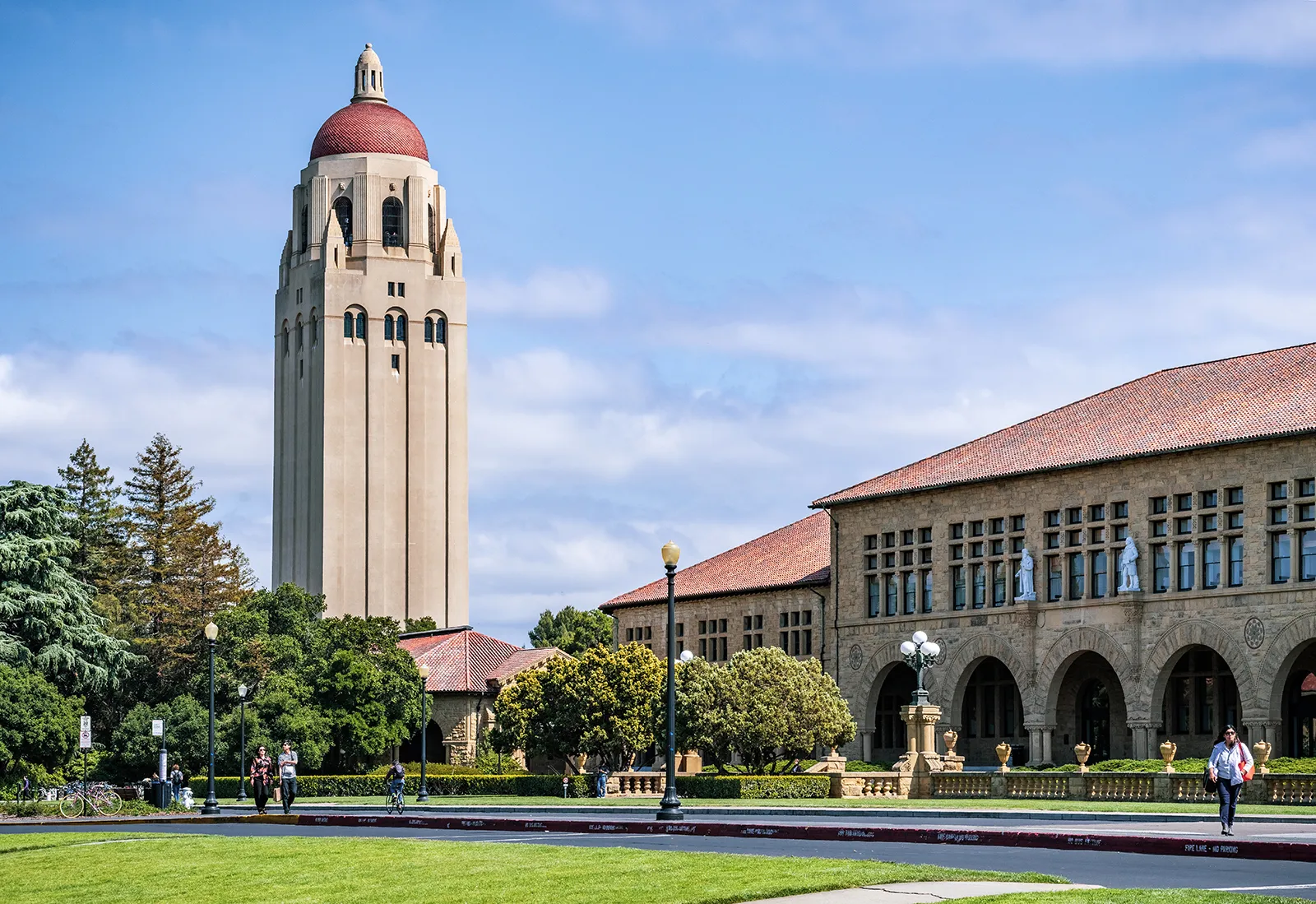
Stanford University, officially known as Leland Stanford Junior University, is one of the world’s most prestigious institutions for higher learning, research, and innovation. Founded over a century ago, Stanford continues to shape global leaders, entrepreneurs, and changemakers across every field — from science and engineering to business, law, and the arts.
History of Stanford University
Stanford University was founded in 1885 by Leland and Jane Stanford in memory of their only child, Leland Stanford Jr., who passed away at age 15. The Stanfords envisioned a university that would serve the public good and promote both practical education and scientific research.
Classes officially began in 1891 with 15 faculty members and around 500 students. Despite early financial challenges, Stanford grew rapidly into a powerhouse of innovation — especially with its close ties to Silicon Valley, the global center for technology and entrepreneurship.
Today, Stanford stands among the top universities in the world, recognized for its academic rigor, cutting-edge research, and contribution to modern technology.
Location
Stanford University is located in Stanford, California, near the city of Palo Alto, right in the heart of Silicon Valley — the global hub of innovation and technology.
Its 8,180-acre campus is one of the largest in the United States, featuring stunning architecture, state-of-the-art research facilities, and a vibrant student community. The location provides students with direct access to leading global companies like Google, Apple, Meta, Tesla, and Adobe, offering unparalleled internship and career opportunities.
Address:
450 Serra Mall, Stanford, CA 94305, USA
Nearest Major City: San Francisco (approx. 60 km north)
Why Choose Stanford University
🌟 Global Reputation
Stanford consistently ranks among the Top 5 universities worldwide (QS World University Rankings, Times Higher Education). It’s known for its excellence in research, innovation, and interdisciplinary learning.
💡 Innovation and Entrepreneurship
Located in Silicon Valley, Stanford has produced some of the world’s leading innovators and entrepreneurs, including the founders of Google, Netflix, Instagram, and Hewlett-Packard. The university promotes creativity and start-up culture through initiatives like the Stanford Innovation Lab and StartX accelerator.
🎓 World-Class Faculty and Research
Stanford’s faculty includes Nobel laureates, Turing Award winners, and global leaders in their fields. The university operates 18 interdisciplinary research institutes, focusing on everything from sustainability to artificial intelligence.
🌍 Diversity and Global Community
With students from over 90 countries, Stanford fosters a multicultural learning environment that encourages collaboration, cultural exchange, and global leadership.
💬 Supportive Learning Environment
Stanford combines academic rigor with a supportive atmosphere, offering academic advising, mental health services, and career mentorship throughout each student’s journey.
Academic Programs
Stanford offers a wide range of undergraduate, postgraduate, and doctoral programs across seven schools:
Schools at Stanford University:
- School of Humanities and Sciences – Arts, social sciences, natural sciences
- School of Engineering – Civil, Mechanical, Electrical, Computer, Bioengineering
- Graduate School of Business (GSB) – MBA, Executive MBA, and business research
- School of Medicine – Medicine, Biomedical Sciences, and Public Health
- School of Law – JD, LLM, JSD programs
- School of Education – Teaching, learning, and policy leadership
- School of Earth, Energy & Environmental Sciences – Sustainability, geology, energy systems
Popular Programs:
- Bachelor of Science in Computer Science
- Bachelor of Arts in Economics
- Master of Business Administration (MBA)
- Master of Science in Artificial Intelligence / Data Science
- Master of Public Policy (MPP)
- Doctor of Philosophy (PhD) in Engineering, Law, or Education
Stanford encourages interdisciplinary study, allowing students to combine fields such as business with computer science, or engineering with sustainability.
Accreditation
Stanford University is fully accredited by the WASC Senior College and University Commission (WSCUC) — one of the most respected accrediting bodies in the United States.
Professional Accreditations include:
- AACSB (Association to Advance Collegiate Schools of Business) – for the Graduate School of Business
- ABA (American Bar Association) – for the School of Law
- LCME (Liaison Committee on Medical Education) – for the School of Medicine
These accreditations ensure that Stanford’s degrees meet the highest standards of academic excellence, ethics, and global recognition.
Academic Quality and Excellence
Stanford is world-renowned for its innovative curriculum, research excellence, and hands-on learning approach. Students benefit from:
- Small class sizes and close interaction with professors
- Access to world-class laboratories and research centers
- Collaboration with industry leaders and government agencies
- A strong emphasis on critical thinking, leadership, and problem-solving
Stanford’s academic environment nurtures both intellectual curiosity and real-world impact, preparing graduates to become leaders, innovators, and global citizens.
Conclusion
Choosing Stanford University means choosing academic excellence, innovation, and limitless opportunities. Its rich history, outstanding faculty, and strong global network make it one of the most desired study destinations in the world. Whether you aim to become a business leader, scientist, engineer, or policymaker, Stanford provides the foundation for success on a global scale.